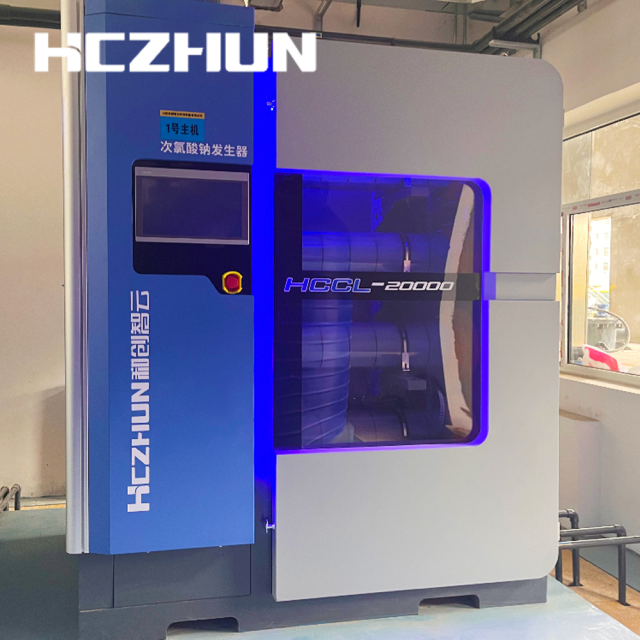
On-Site Generation Benefits
- Match the concentration to the duty.
- Generating on site lets the working strength be set for what it feeds — a pool, a waterworks and a wastewater outfall do not want the same solution, and the machine can be set to suit.
- Use it fresh.
- Hypochlorite loses strength in sunlight and heat, so a delivered batch is already decaying before it reaches the dose point.
- An on-site sodium hypochlorite generator makes the batch that is dosed that day, so the strength the controller reports is the strength in the tank.
- Cost at scale.
- On a large site the ongoing cost of delivered hypochlorite is mostly water, packaging, transport and distribution.
- An industrial sodium hypochlorite generator running most of the day replaces that recurring spend with salt, power and maintenance.
- Less risk on the road and in the store.
- Concentrated hypochlorite is corrosive to handle and to keep.
- Generating on site means the strongest material in the building is a working-strength solution, which simplifies storage, bunding and the paperwork that goes with chemical deliveries.
- A smaller transport footprint.
- Every tonne of hypochlorite that is not trucked to site is diesel and carbon that is not spent, which matters where the plant reports environmental performance.
- Production on demand.
- Demand spikes — an outbreak, a flood, a process upset — do not wait for a delivery schedule; the plant turns up output within the capacity of its model.
- Visibility and control.
- Operators can see concentration and production rate as they run and adjust the dose point with the process, instead of working around whatever strength arrived on the last load.
- Room to trial.
- Sites testing a new dose point or a different disinfection regime can make up a batch at the strength they want to try, without ordering a drum of chemical they may never use again.
Product Overview
A chlorine room that used to take a tanker of hypochlorite every week now runs a batch in the morning and doses it the same afternoon. Salt goes in at one end, softened water and power alongside it, and a working-strength disinfectant solution comes out at the other, at the rate the plant is drawing it.
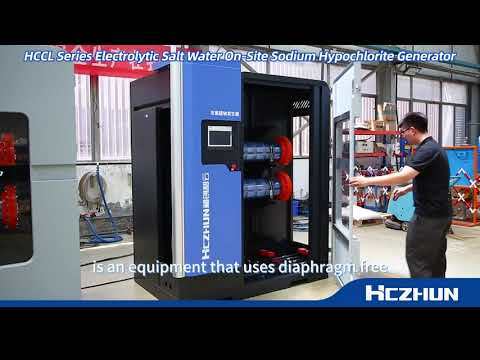
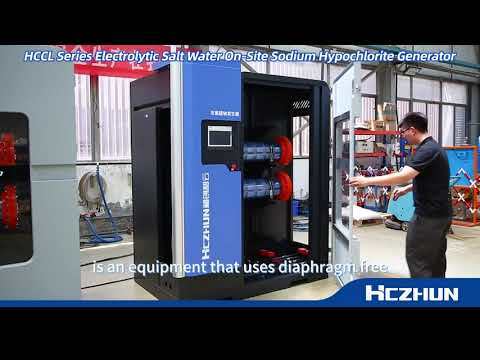
Inside the cabinet the process is straightforward brine electrolysis. Salt is dissolved to saturated brine, softened water dilutes it to the strength the cell needs, and a diaphragm-free electrolytic cell converts it into hypochlorite, hydrogen and a small amount of spent brine. No concentrated chemical is bought in, and nothing stronger than the 6,000–8,000 ppm working solution is held on site.
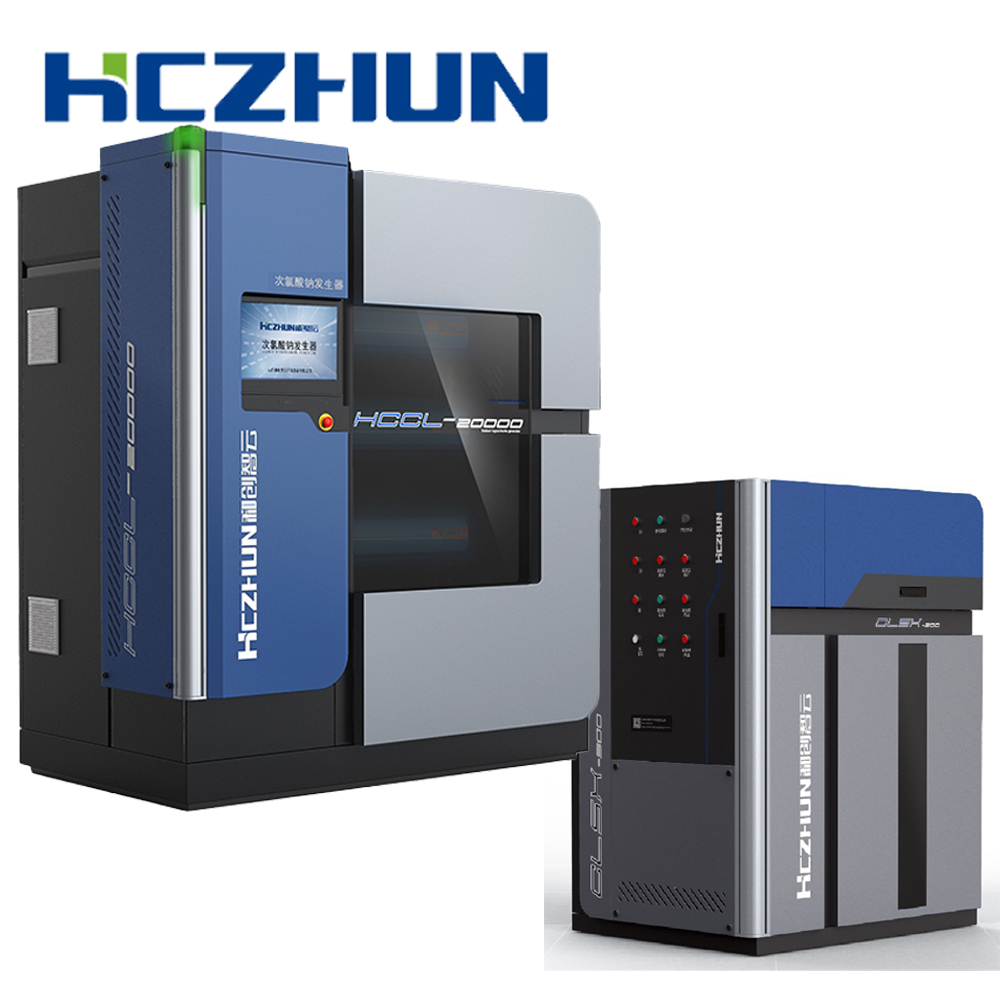
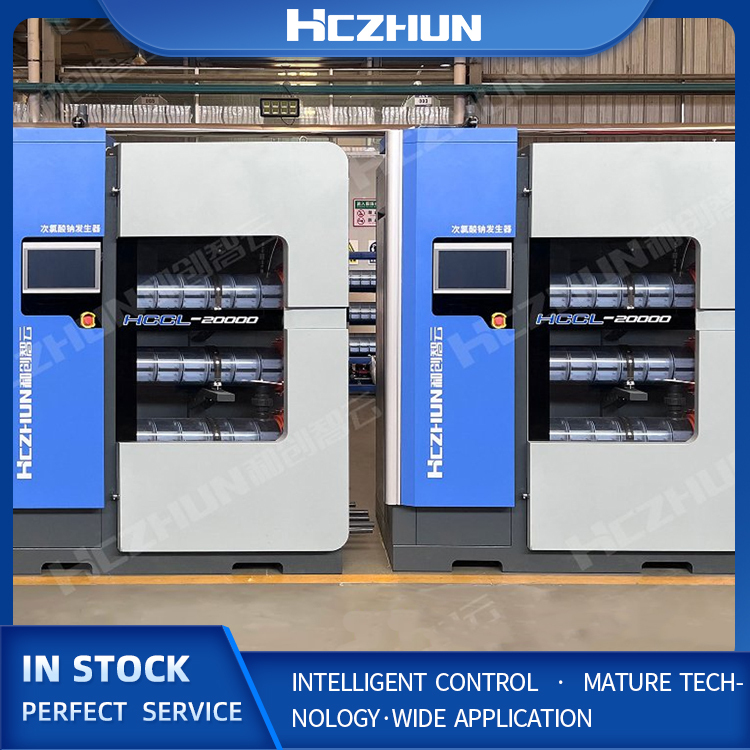
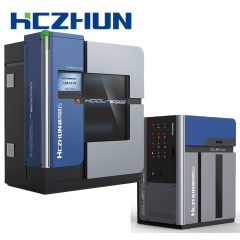
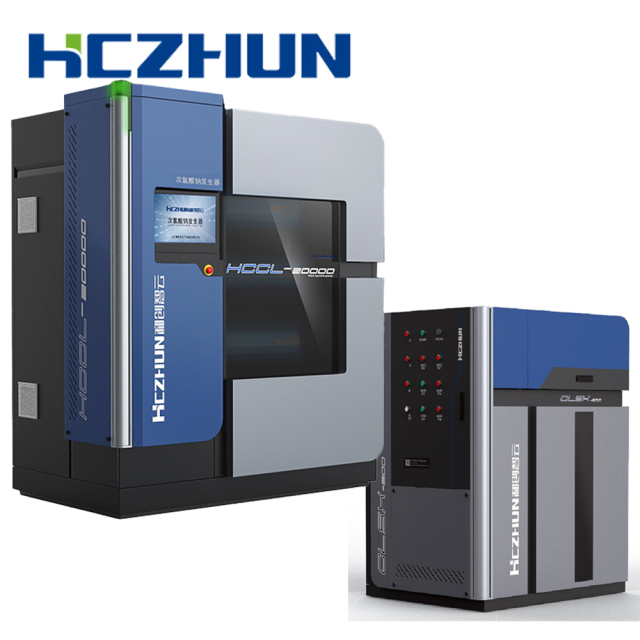
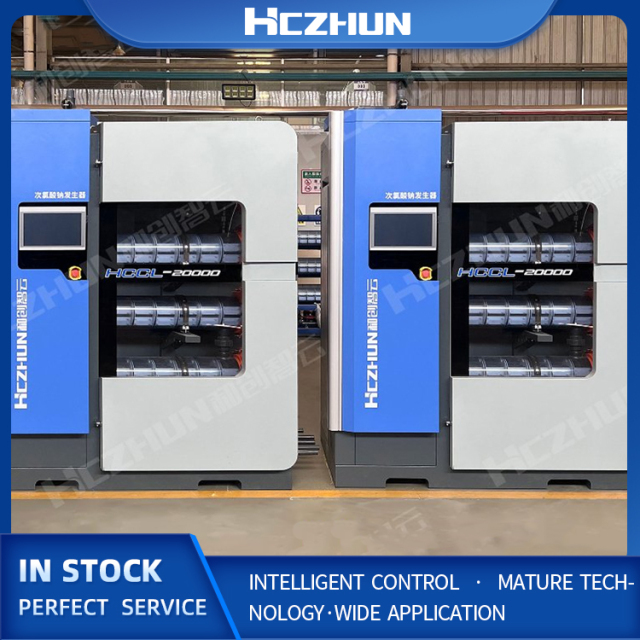
Seven models span 7,000 to 50,000 g/h of available chlorine. The first four share one cabinet footprint, so the room, the salt store and the power supply can be planned once and matched to whichever model the duty needs — which is what makes a high capacity sodium hypochlorite generator in this band practical to fit into an existing plant room.
Duty points are the familiar municipal and industrial ones: waterworks disinfection, municipal wastewater disinfection, swimming pool water, rural drinking water schemes, hospital wastewater, and disinfection, deodorisation and decolourisation in reclaimed-water reuse.
Where the project does not fit the table — a larger output, a different split between generation and storage, a tighter room — the machine is laid out to the project drawings instead. A custom sodium hypochlorite generator is confirmed against the utilities you can supply and the space you actually have before the order is released, not after.
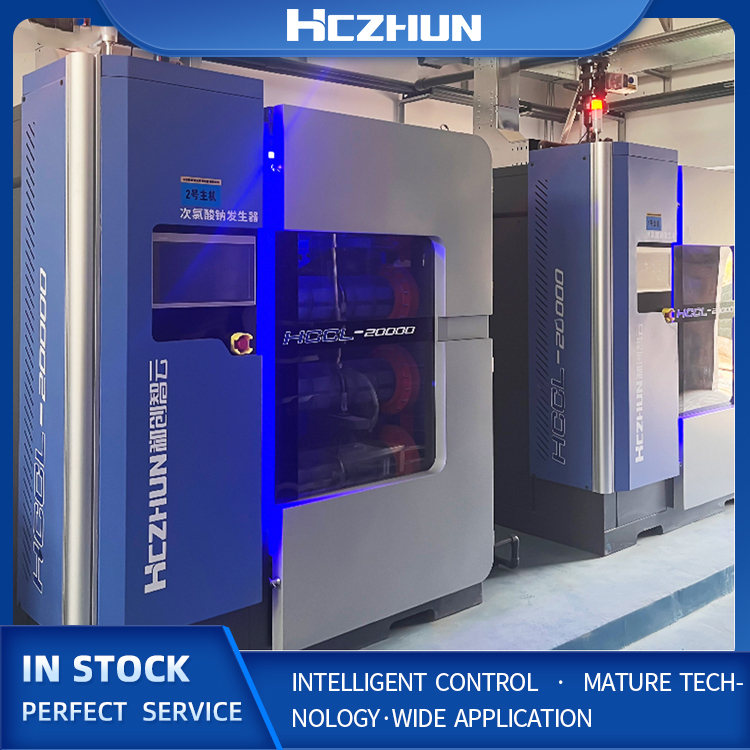
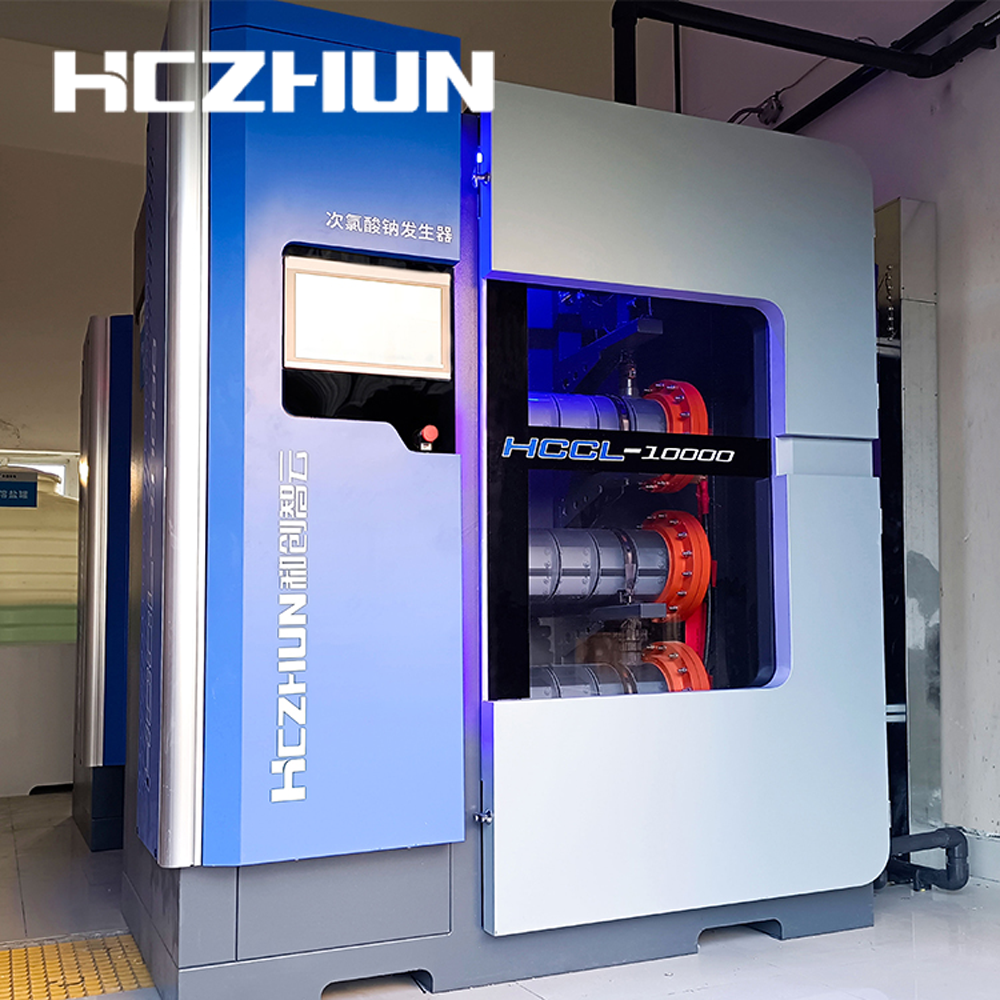
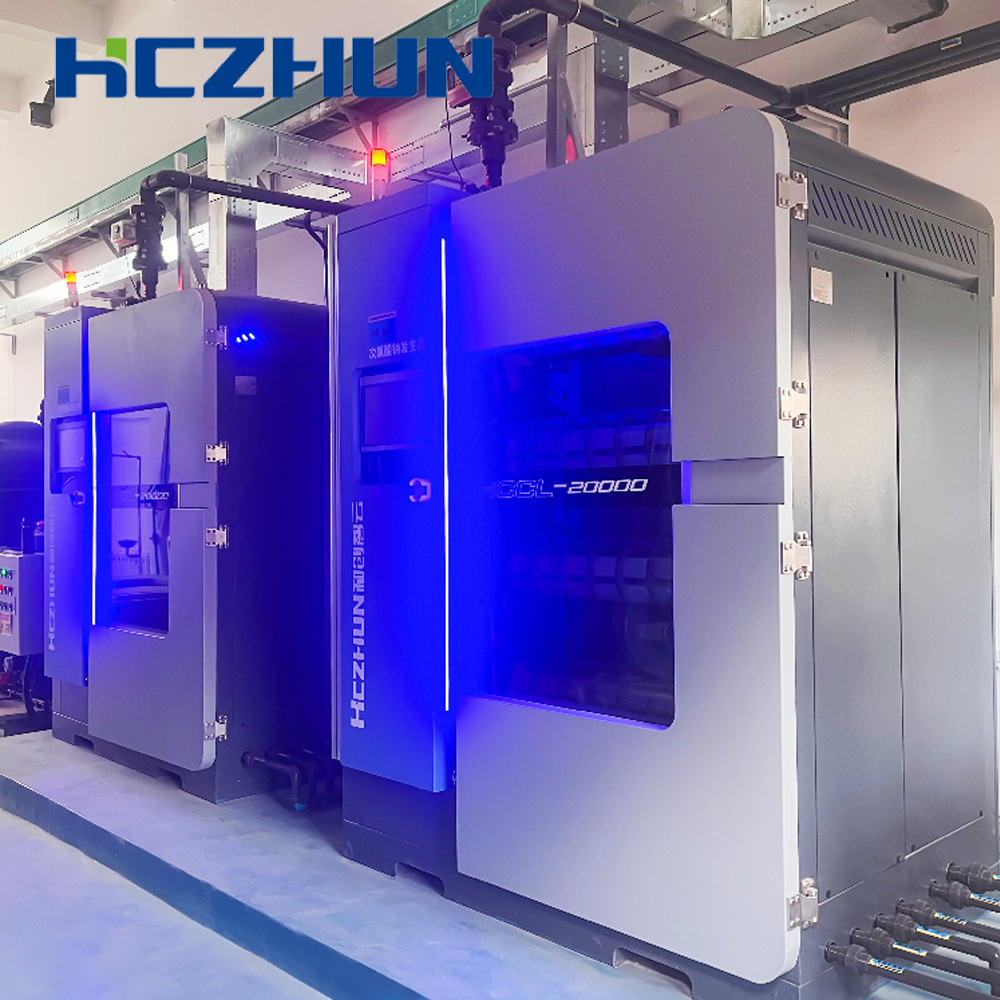
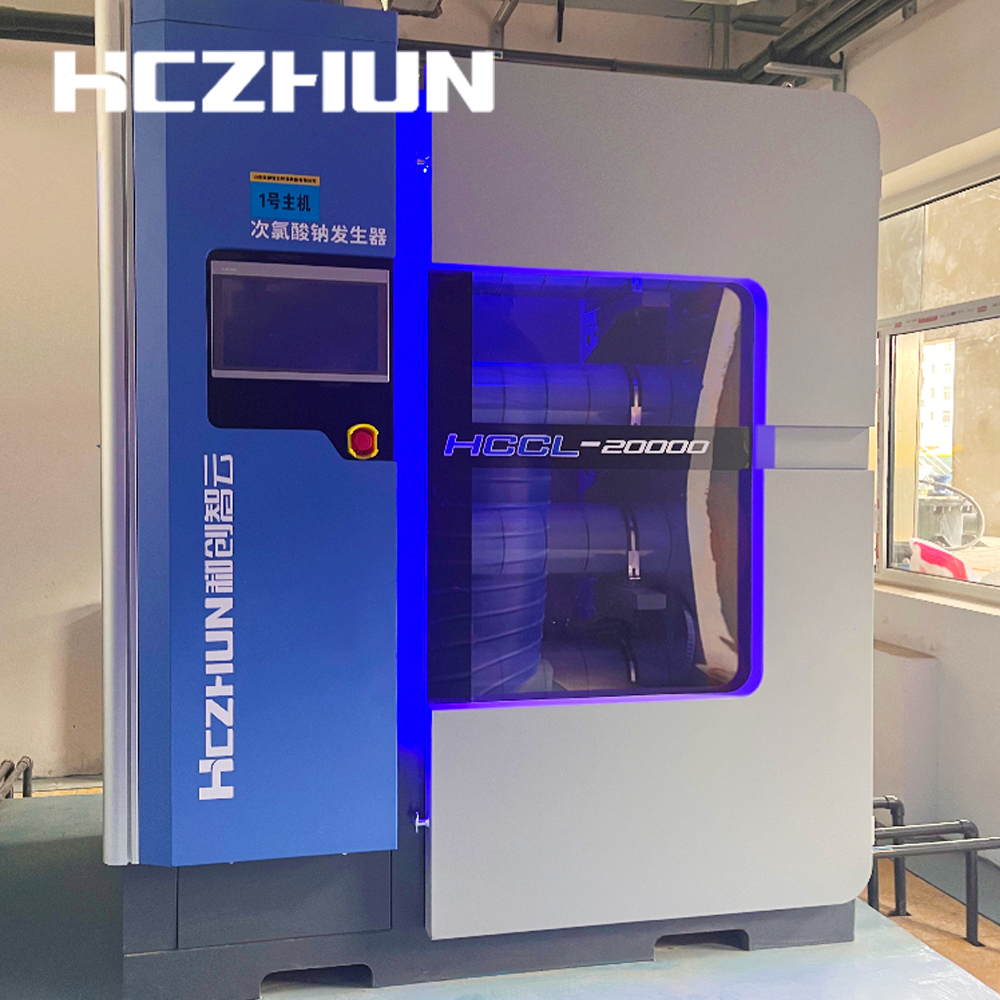
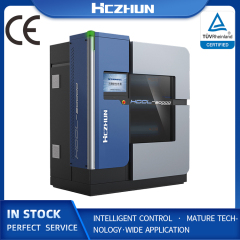
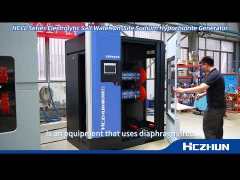
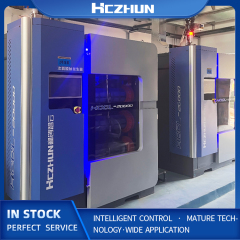
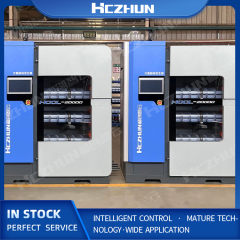
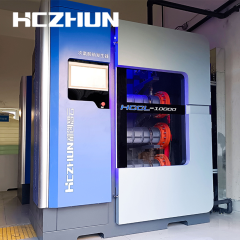
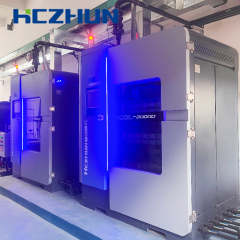
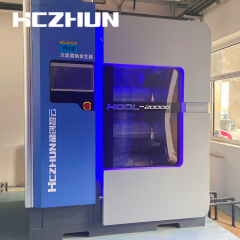
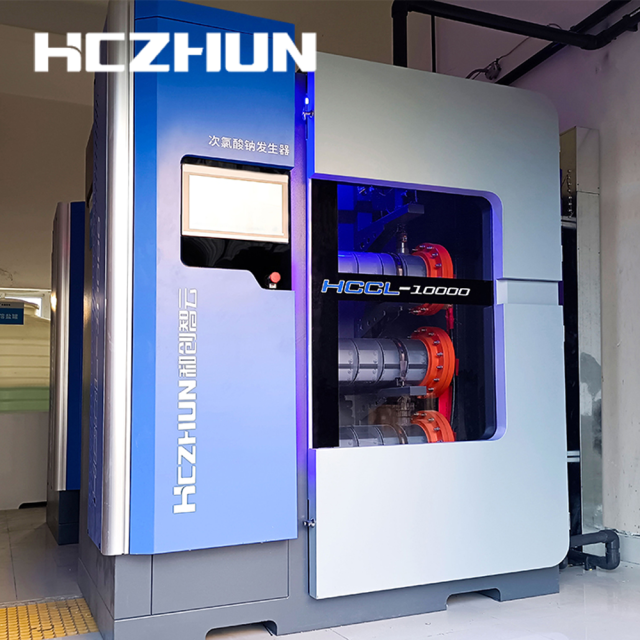
The generator sits at the centre of a small generation line rather than standing alone: softener, soft-water stabiliser, salt feeder, dissolving tank and brine pump on the feed side, and acid washing, storage tank, hydrogen exhaust fan and dosing set on the output side. The unit itself is a floor-standing cabinet with a front control panel and an inspection window, so the running state can be read from the aisle without opening anything.
Patented Core Technology
- Whole-machine design patent.
- An invention patent covers the layout of the unit itself — how the cell, the feed, the storage and the controls sit together — not only the components inside it.
- Electrolytic cell patent.
- The cell of the sodium hypochlorite generator carries a utility model patent.
- That is where the chlorine is actually made and where efficiency and service life are decided, so it is the part that most deserves a protected design.
- Salt feeder patent.
- The feeder that meters dry salt into the brine loop is patented as well.
- Consistent brine strength starts there, and the output of the cell depends on it.
- Diaphragm-free construction.
- There is no membrane between the electrodes to foul, blind or replace.
- Dilute brine passes through the cell and the hypochlorite leaves with the spent brine, which is why the feed can be ordinary salt and softened water.
- Feed side built as a system.
- Salt feeder, dissolving tank and brine pump deliver saturated brine at a steady strength, and the dilute brine dispenser sets it to the concentration the cell is designed for, so the cell is never correcting for a wandering feed.
- What the patent record is worth to a buyer.
- For anyone comparing sodium hypochlorite generator manufacturers, patents on the machine, the cell and the salt feeder show which parts are engineered by the supplier rather than assembled from bought-in units — and spares and service then follow a known drawing instead of a generic one.
Control System
- Automated operation.
- IoT two-way communication and an algorithm that follows each component through the whole process keep brine make-up, electrolysis, storage and dosing running as one automatic sequence rather than a series of manual steps.
- Centralized monitoring.
- A remote cloud service, PC group-network co-monitoring and a mobile app let a plant watch several units together and let an engineer check production and status without walking the chlorine room.
- Automated pickling.
- Acid washing, which is what keeps scale off the cell, is scheduled and carried out by the controller through the acid washing machine instead of being left to a manual maintenance task.
- Automatic fault detection.
- When a condition drifts outside its band the controller identifies the fault on screen and stops the sequence, so the plant is not left dosing an off-spec batch.
- One screen for the shift.
- The front panel shows run state, production figures and any alarm, and the indicator light panel repeats the essentials for anyone walking past the cabinet.
- Fewer hands needed.
- The practical result is that an on-site sodium hypochlorite generator at this scale can run through a night shift with nobody standing at the panel — the operator checks in, reads the record and responds to alarms.
- A record you can hand over.
- Cloud monitoring keeps the production history, which matters when an industrial sodium hypochlorite generator has to account for chlorine output or show that a dose point stayed covered through a maintenance window.
Safety Systems
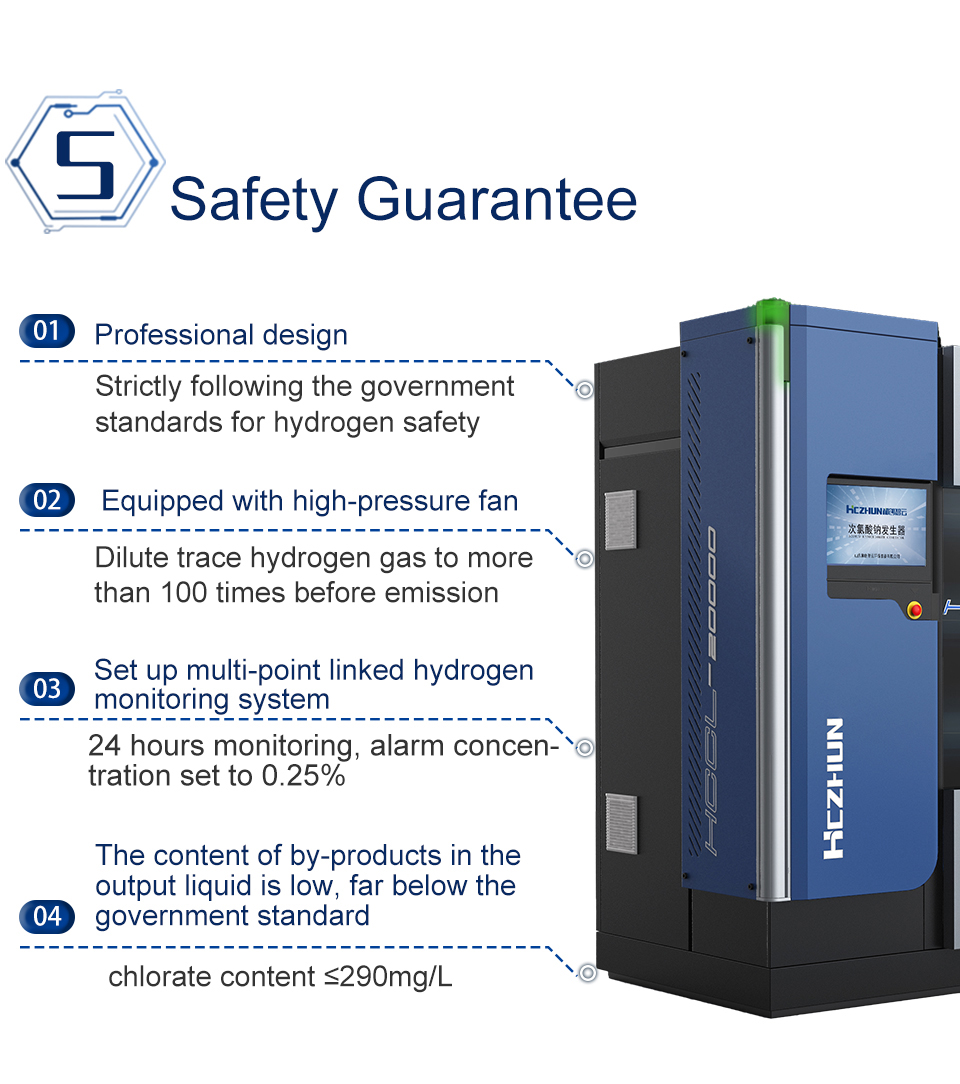
Hydrogen is a by-product of hypochlorite electrolysis, and it is treated as one. The generation line includes a dedicated hydrogen exhaust fan, and the cell room is ventilated and ducted so the gas leaves the room rather than collecting around the cabinet. The fan belongs to the start-up routine: it runs whenever the cell runs.
Operational safety on a sodium hypochlorite generator of this size comes from keeping the operator away from the chemistry. Start-up, shutdown, acid washing and dosing are sequenced by the controller; the person in the room handles dry salt and reads the panel, while the machine handles brine and acid.
Water safety sits on the feed side. The cell is designed to run on softened, stabilised water, and keeping hardness out of it protects both current efficiency and electrode life. A softener and a soft-water stabiliser are part of the generation line for that reason, not an optional extra.
Access is arranged so that inspection is not a risk in itself. The front door opens onto the cell and the internal fittings, the inspection window shows the interior without opening anything, and the emergency stop sits on the front panel within reach of the aisle.
Room practice matters as much as the machine. Keep the cell room ventilated, discharge the exhaust outside, keep ignition sources and unrelated chemicals out of the room, and keep the salt dry so the feeder is not working with caked material.
At handover the operating sequence is walked through with the people who will run it — start-up checks, the exhaust fan, the alarm list and the wash routine — so the written procedure on the wall matches the machine in front of them.
Specifications
| Model | Available chlorine | Water consumption | Salt consumption | Power consumption | Overall dimensions (W × D × H) |
|---|
| HCCL-7000 | 7000 | 1.12 m³/h | 19.6 kg/h | 30.1 kW | 1880 × 1260 × 2285 mm |
| HCCL-8000 | 8000 | 1.28 m³/h | 22.4 kg/h | 34.4 kW | 1880 × 1260 × 2285 mm |
| HCCL-10000 | 10000 | 1.6 m³/h | 28 kg/h | 43 kW | 1880 × 1260 × 2285 mm |
| HCCL-20000 | 20000 | 3.2 m³/h | 56 kg/h | 86 kW | 1880 × 1260 × 2285 mm |
| HCCL-30000 | 30000 | 4.8 m³/h | 84 kg/h | 127 kW | Designed to project requirements |
| HCCL-40000 | 40000 | 6.4 m³/h | 112 kg/h | 172 kW | Designed to project requirements |
| HCCL-50000 | 50000 | 8.0 m³/h | 140 kg/h | 215 kW | Designed to project requirements |
Energy Saving & Material Consumption
| Basis | Design |
| Salt feed | Dry salt is dissolved on site, and the feeder meters it to match production rather than running a fixed excess |
| Brine strength | Held at the set point, so the cell works at design current instead of being over-fed |
| Solution strength | Working solution at 6,000–8,000 ppm is produced directly for dosing, with no dilution step and no over-strong batch left to decay |
| Water | Softened and stabilised before it reaches the cell, which protects current efficiency and electrode life |
| Power | Quoted per model in the table above, so the running cost can be calculated before the order rather than after commissioning |
| Storage | Solution is made to demand, so the tank carries a working-strength batch rather than a concentrate that has to be diluted and monitored |
| Consumables | The main consumable is ordinary dry salt, bought and stored as a solid rather than delivered as liquid hypochlorite |
Ordering & Delivery
- Start with the duty point.
- Available chlorine in g/h, the average and the peak, plus the hours the plant actually runs.
- That is the figure that decides whether a standard model covers the job or a high capacity sodium hypochlorite generator has to be laid out to your drawings.
- Check the utilities you can supply. Softened water at the model's consumption rate, dry salt storage that matches the daily figure, and power for the installed load. If one of these falls short, it changes the model rather than the other way round.
- Confirm the installation.
- Floor area and access for the cabinet, ventilation and a route for the hydrogen exhaust duct, and a position for the storage tank and dosing set relative to the dose point.
- Talk to us before assuming a standard model.
- Above 30,000 g/h the unit is designed to the project anyway, and below that the split between generation, storage and dosing can be adjusted.
- A custom sodium hypochlorite generator is quoted from your drawings and site constraints.
- Agree the commercial terms with your sales contact.
- Price, lead time, payment terms, packing and shipping arrangements depend on the model, the scope of the line and the destination, so as sodium hypochlorite generator manufacturers we set them per project — confirm them with your sales contact before the order goes ahead.
- Take the documentation with you.
- The model table is issued as a downloadable specification sheet, alongside the drawings and the current certification documents your consultants need for the project file.
Technical Support & Model Matching
Send us your duty point, available utilities and site constraints, and our engineers will match a model from our range and confirm the configuration with you before anything is built — including custom designs where the project calls for it. That support continues after delivery: our technical team assists with installation and commissioning guidance, operator handover, fault finding and spare-part replacement, and we provide the drawings and specifications your project team needs. Share your process details and we will come back with a recommended model and a clear technical proposal.
FAQ
What strength solution does the machine produce, and can it be adjusted?
A working solution of 6,000–8,000 ppm, made continuously and dosed at that strength. Because an on-site sodium hypochlorite generator makes the batch on the day it is used, the solution does not sit in a tank losing strength and the dose point receives what the controller reports. If your process needs a particular working concentration, tell us the target and we will confirm the setting against your dosing equipment.
How do I work out salt and power consumption for my duty?
Take the row in the table above that matches your available chlorine demand; it lists water, salt and power for that model at full output. Multiply each figure by the hours the plant runs for a daily total, then by your local salt and electricity prices for a running cost. For an industrial sodium hypochlorite generator running continuously, salt is normally the largest consumable line, so it is worth pricing the local dry salt supply before you commit.
Can the unit be built outside the standard table?
Yes. From 30,000 g/h upward the unit is already laid out to the project rather than taken straight from the table, and below that the split between generation, storage and dosing can be adjusted to suit the room you have. Send the duty point, the utilities you can supply and the space available, and we will confirm a layout. When you compare sodium hypochlorite generator manufacturers, the point worth checking is whether the cell, the salt feeder and the cabinet come from the same engineering team, because that is what makes a non-standard layout practical to build and to support.
What capacity do I need to specify?
Work it out from the dose rather than from the size of the plant: required dose in mg/L multiplied by flow in m³/h gives the available chlorine demand in g/h. Specify on the peak of that figure, not the average, and use running hours to work out the daily salt and power the plant will actually draw. A high capacity sodium hypochlorite generator is usually sized on the peak with storage carrying the difference between peak and average, so send us both figures and we will confirm the model together with the storage volume.
Which parts of the generation line come with the machine?
The line is built up from the softener and soft-water stabiliser, the salt feeder with its dissolving tank and brine pump, the dilute brine dispenser, the generator itself, the acid washing machine, the storage tank, the hydrogen exhaust fan and the dosing set. Which of those are inside the supply scope depends on what your plant already has — a site with a softener and a storage tank in place needs far less than a greenfield installation. Tell us what exists and a custom sodium hypochlorite generator scope is drawn around it.
What maintenance does the cell need?
The cell is the part that works hardest, and scale is what shortens its life. Softened, stabilised water on the brine electrolysis side is the first defence; the second is acid washing, which the controller schedules and runs through the acid washing machine instead of leaving it to a manual strip-down. How often that wash runs depends on your water hardness and running hours, so the interval is set with you at commissioning and adjusted from the operating record. Electrodes, seals and the salt feeder are the parts worth holding as spares.