Product Overview
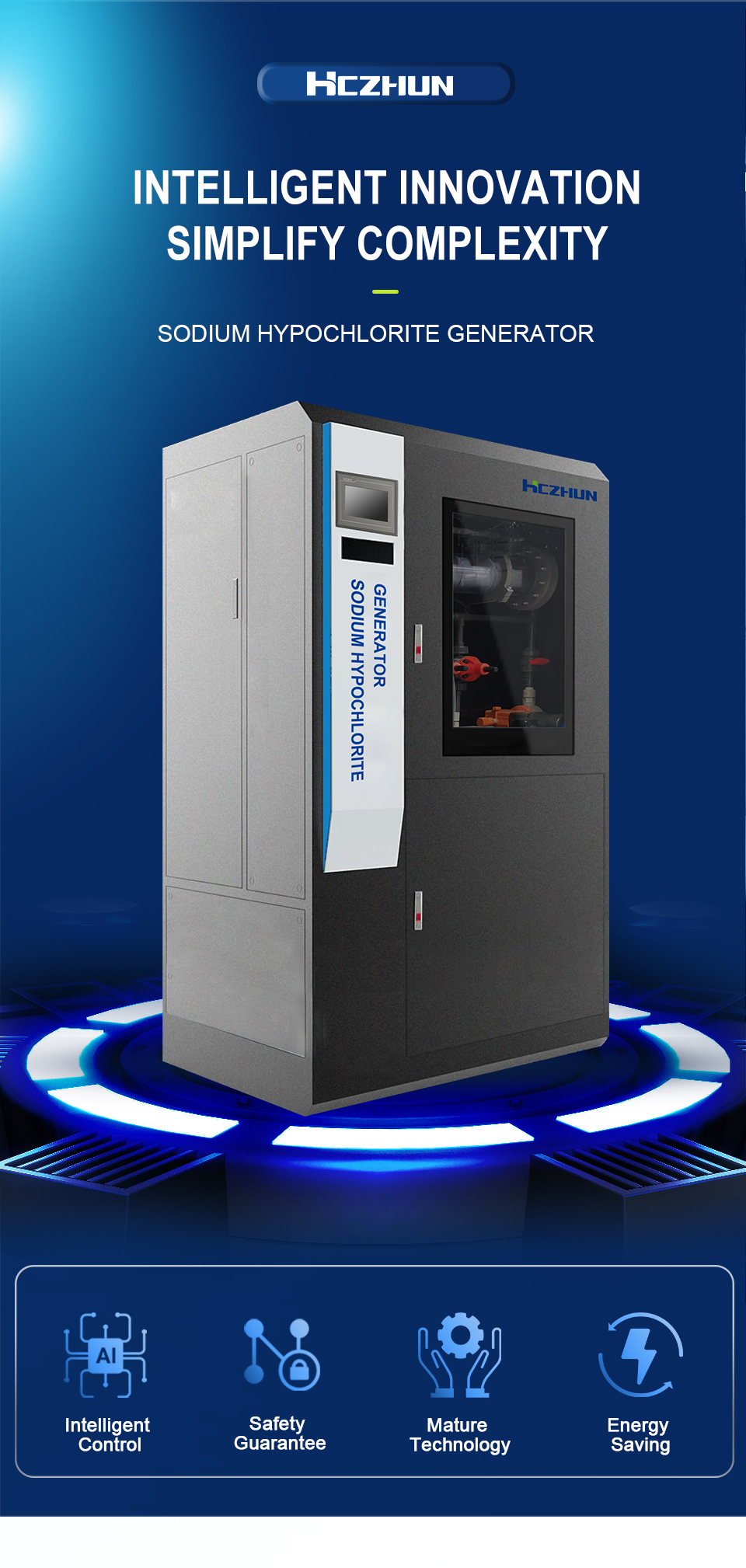
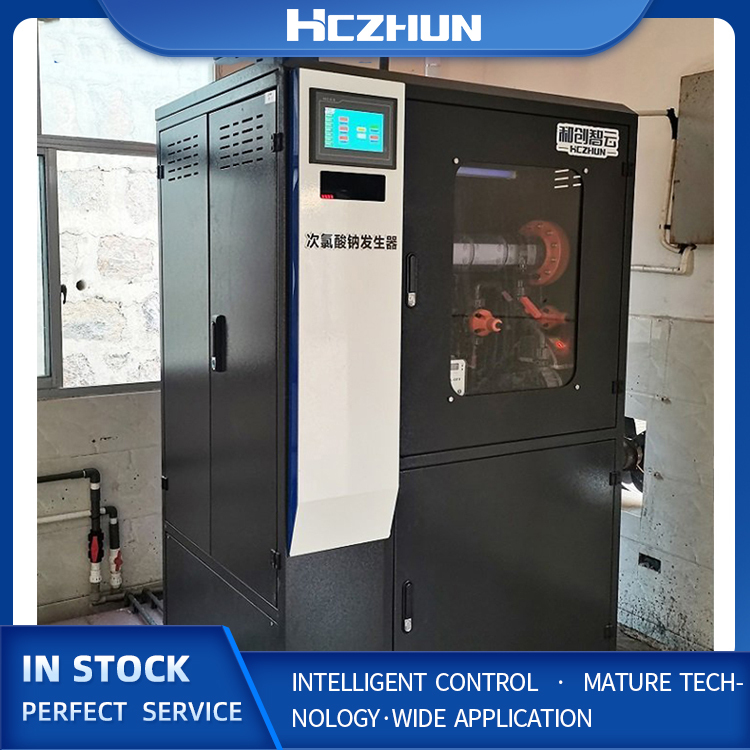
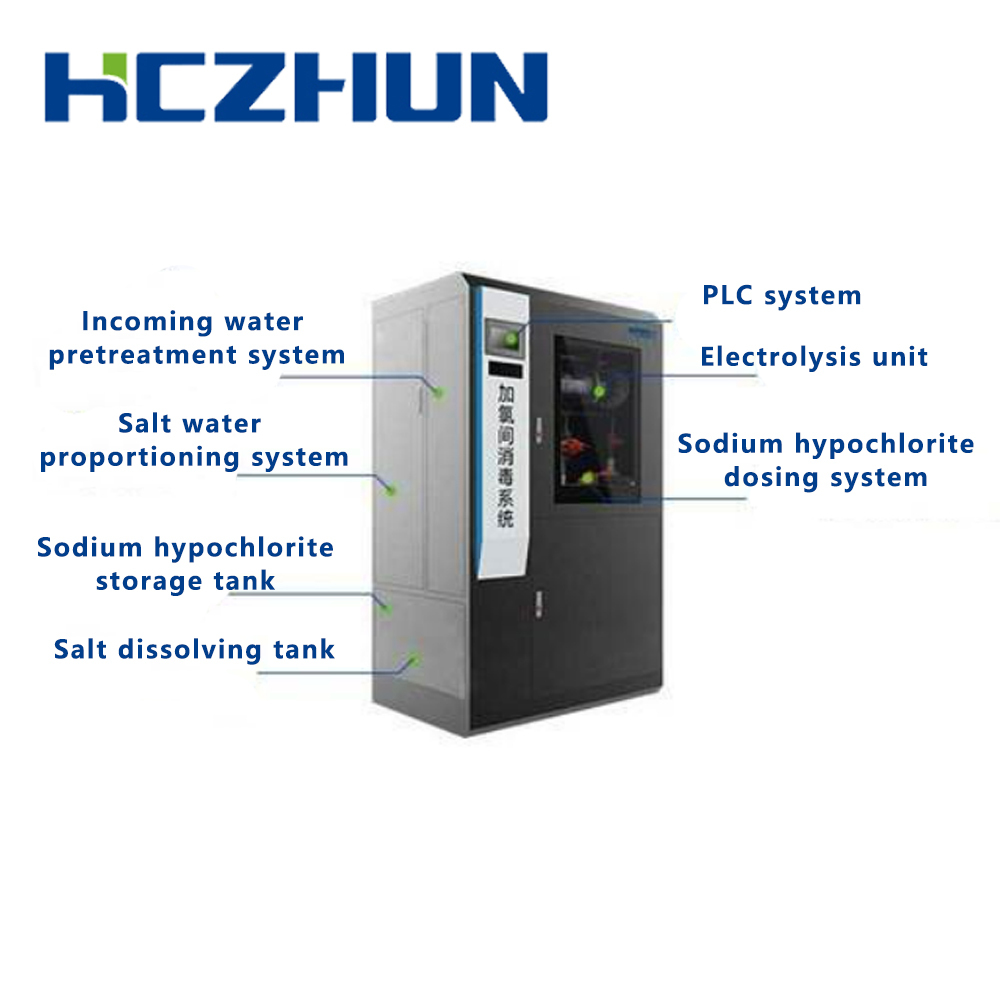
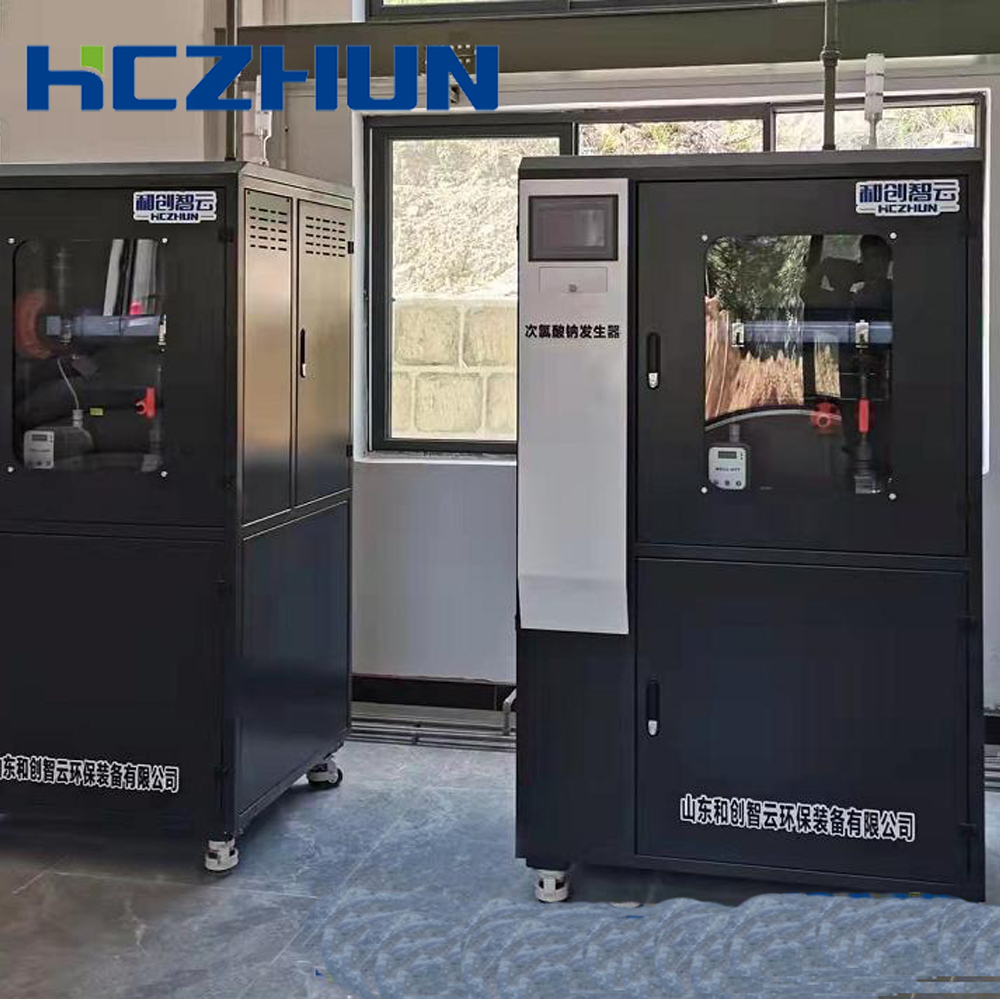
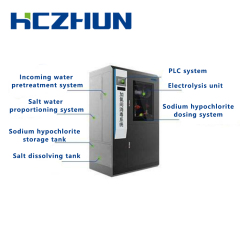
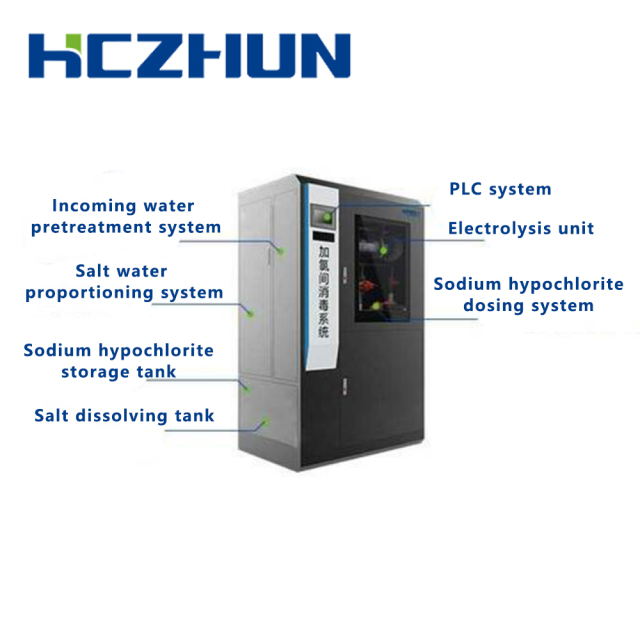
A village waterworks, a hospital campus or a food plant disinfects every day, yet the usual answer is still a tanker of hypochlorite: drums in a store, a dosing pump chasing a concentration that drifts, and paperwork that has to line up with the shift pattern. At this scale an on-site sodium hypochlorite generator replaces that chain with three inputs the site already has — salt, softened water and power. Inside the cabinet, brine passes through an electrolytic cell and comes out as a low-concentration hypochlorite solution, which is held in a storage tank and drawn off to the dosing point as the process needs it. The HCCL series produces that solution at roughly 6,000–8,000 ppm, so what sits in the tank is a weak disinfectant rather than delivered concentrate. Duty points are modest and steady: a small municipal works, the disinfection stage of a wastewater plant, hospital sewage, a rural domestic sewage scheme, industrial circulating water, river and odour control, breeding wastewater, or wash-down water in food and beverage production. What these have in common is a chlorine demand measured in grams per hour rather than tens of kilograms, which is the band this cabinet covers, a long way below the high capacity sodium hypochlorite generator units built for municipal flows. Matching output to demand matters more than floor space here. A normal day is undemanding. Salt goes into the dissolving tank when the level drops, the controller looks after start-up, pickling and shutdown, and the operator's round is a glance at the panel and a check through the inspection window. Plant rooms are rarely ideal. If the standard cabinet will not fit the space or reach the connection points, ask our engineers about a made-to-fit cabinet before the layout is fixed — it is easier to settle at drawing stage than after the plinth is poured.
Technical Advantages
- Same platform as the larger units — the control functions, the safety layout and the patented components come down from the machines we build for municipal flows, including the high capacity sodium hypochlorite generator range.
- One cabinet size across the whole band — every model from 50 to 500 g/h sits on the same frame, so moving up a step later does not mean re-planning the plant room.
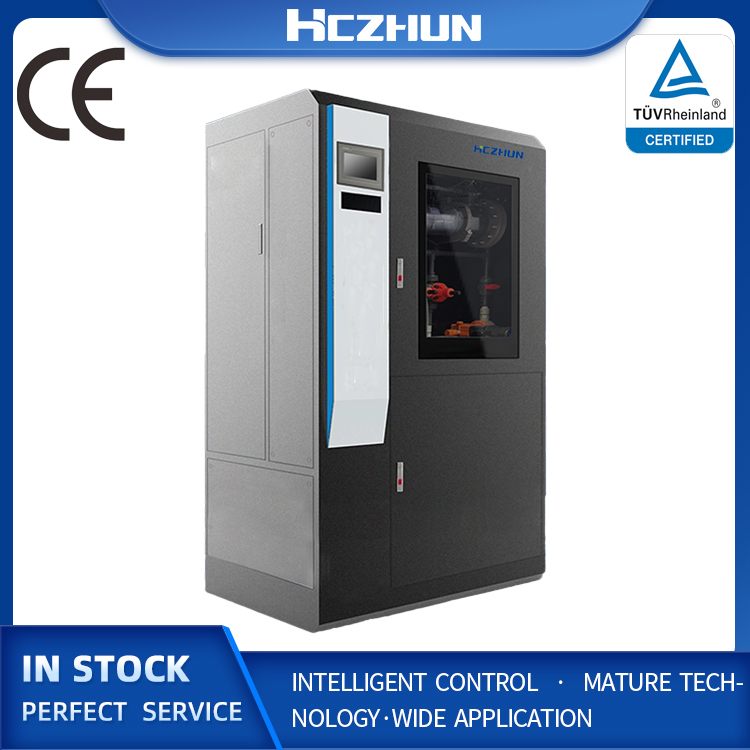
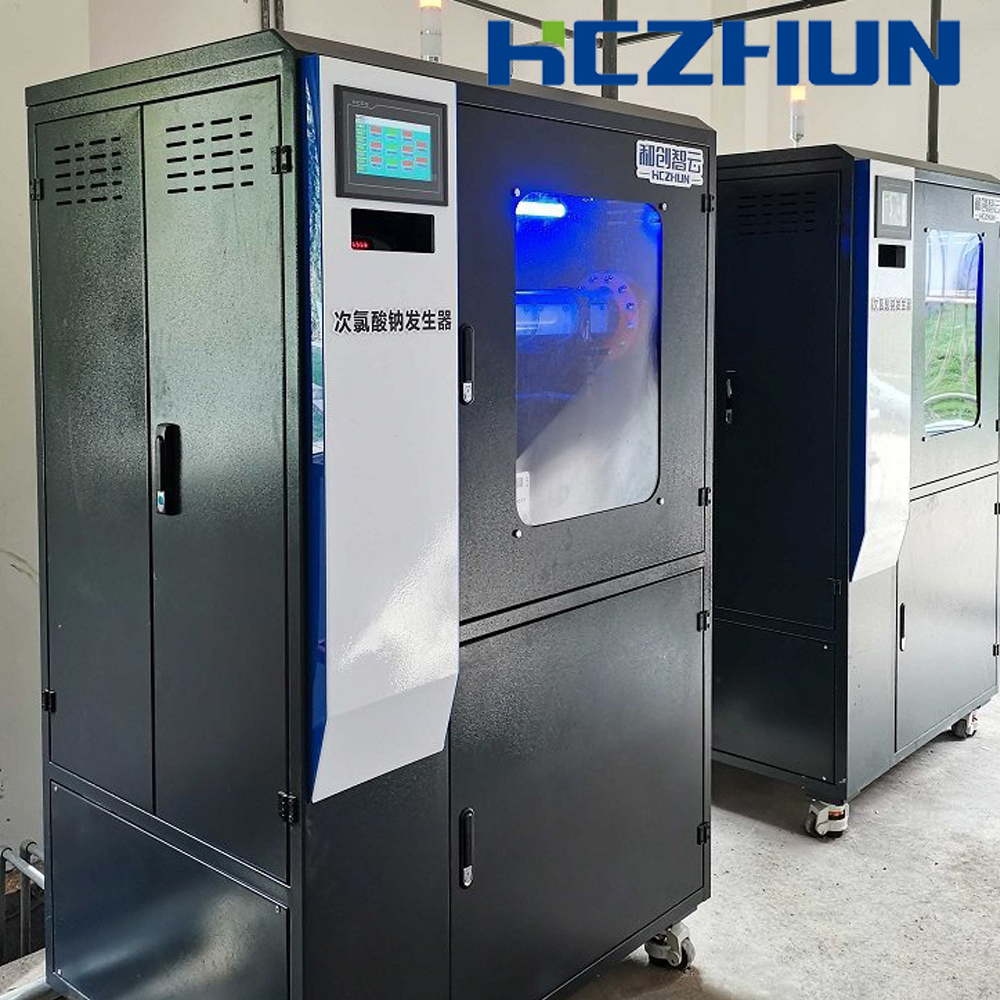
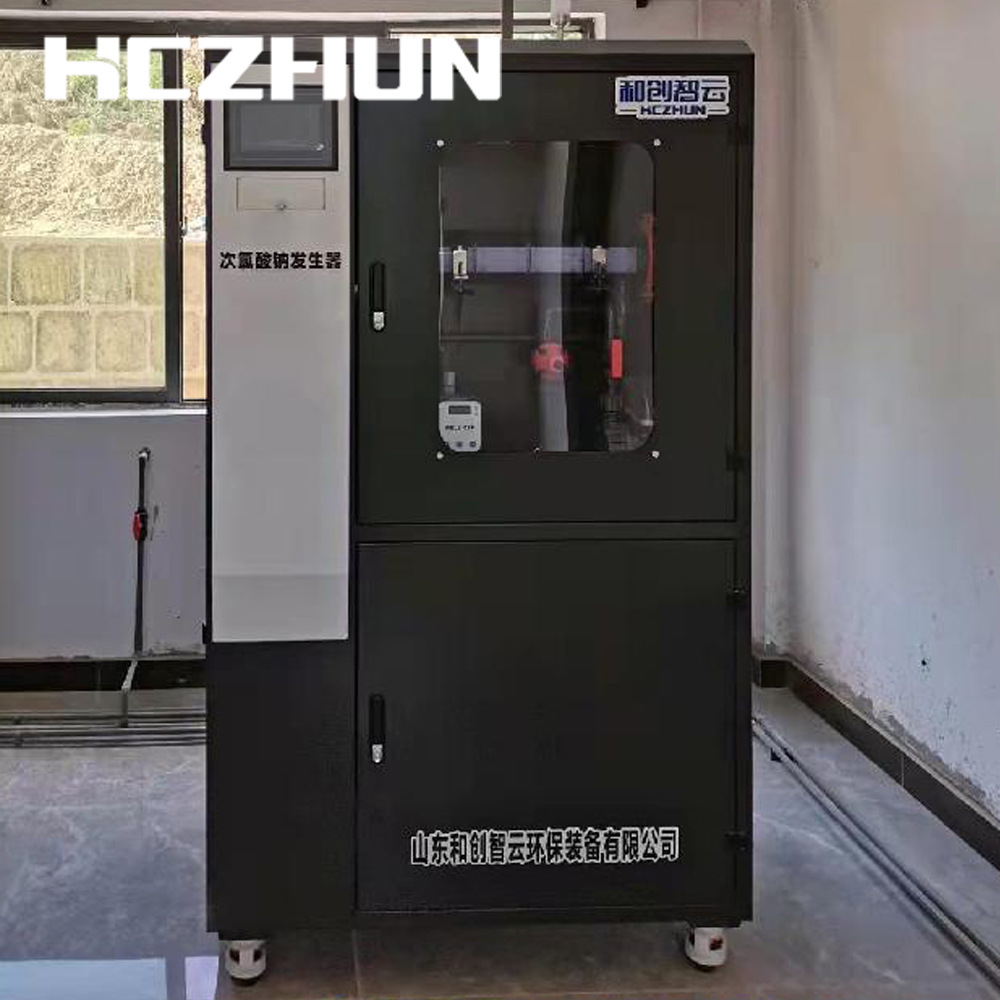
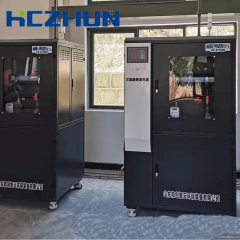
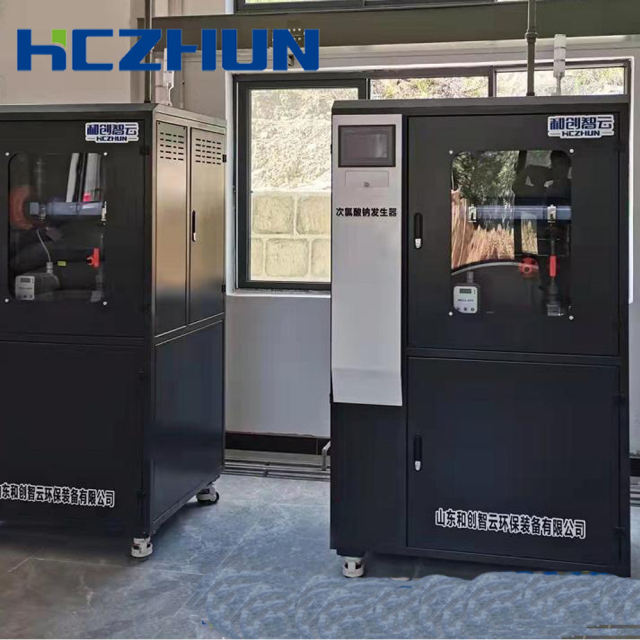
- Front access for routine work — hinged front doors, a clear inspection window and the control panel all face the operator aisle, so a daily check does not mean pulling panels off.
- Packaged and floor-standing — the cabinet arrives as one assembly to set on a level plinth and connect to water, drain, power, storage and vent, instead of being built up pipe by pipe on site.
- Scaled for a single duty point — one cabinet covers a village waterworks, a hospital sewage plant or an industrial disinfection stage without the cost and complexity of a plant-wide system.
- A known routine across the family — the operating logic and the documentation stay the same from one size to the next, so a site that adds a second cabinet does not start from scratch.
Mature Technology and Patents
- Invention patent on the whole-machine design — the cabinet layout, the cell position and the service access are a patented arrangement rather than a one-off fabrication, and it is the same arrangement we build into the high capacity sodium hypochlorite generator units.
- Utility model on the electrolytic cell — the component that decides how efficiently brine converts and how long the unit runs between services.
- Utility model on the salt feeder — steady brine strength starts with steady salt feed, and the feeder is where that is set.
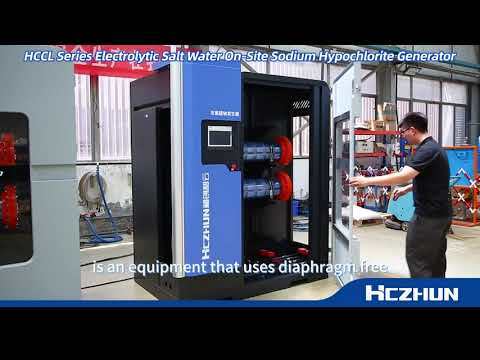
- Diaphragm-free electrolysis — the cell works directly on dilute brine, so there is no membrane stack to replace on a service interval.
- Ours from the drawing board — the patents sit with us as the sodium hypochlorite generator manufacturers: cabinet, cell and salt feeder are our own designs, which is why a replacement cell or a second unit is a known quantity rather than a match by eye.
Safety Systems
Operational safety begins with what is in the building. A weak solution made on demand is a much smaller hazard than decanted concentrate or a chlorine gas cylinder, and an on-site sodium hypochlorite generator keeps the operator's exposure to a bag of salt and a wash cycle.
Hydrogen exhaust safety. Electrolysis releases hydrogen, and the cabinet is ducted to a dedicated exhaust fan that carries it out of the room. The vent route and its outdoor termination are part of the site design, so agree the path before the unit is positioned.
Water safety. The cell runs on softened water, and the softener is there to keep hardness scale off the electrodes. Keep the make-up and brine circuits separated from the potable supply as your local rules require, and fit backflow protection on the fill line if it is not already in place.
Ventilation and access. The room needs ventilation and a clear operator aisle; salt bags stacked against the inspection window are a small habit that makes a daily check harder than it needs to be.
Commissioning checks. Before handover, confirm the hydrogen vent is connected and running, that isolation points are labelled, and that the operating team has been walked through the alarm list.
Precision Control
- Start-up and self-check.
- On a start command the controller takes the unit through its own sequence, so nobody is opening valves by hand or watching a level.
- Running under automatic control.
- Brine feed, water supply and cell conditions are held in their working range, and the panel shows the state of the run.
- Output follows the duty.
- Generation is matched to what the storage tank and dosing point are drawing, so the dose at the injection point stays where it was set rather than running flat out into a full tank.
- Automatic pickling. Scale on the cell is cleaned on the machine's own acid-wash cycle, so the cell is not stripped and soaked by hand.
- Fault detection and safe stop.
- When something drifts out of range the sodium hypochlorite generator alarms and goes to a safe state, with a fault the operator can act on.
Specifications
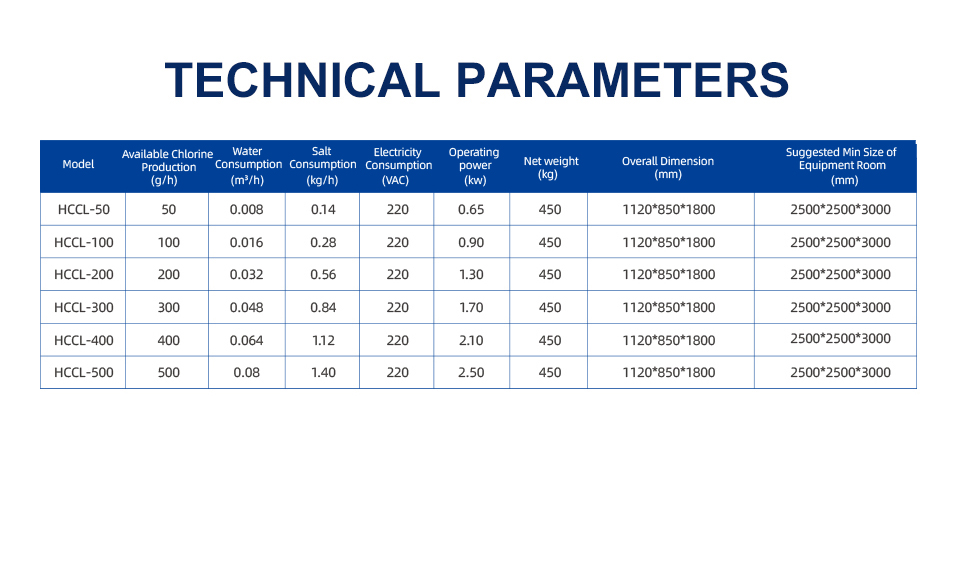
| Model | Available chlorine (g/h) | Water consumption (m³/h) | Salt consumption (kg/h) | Electricity consumption (kW/h) | Overall dimension W×D×H (mm) |
|---|
| HCCL-50 | 50 | 0.008 | 0.14 | 0.65 | 1120×850×1800 |
| HCCL-100 | 100 | 0.016 | 0.28 | 0.90 | 1120×850×1800 |
| HCCL-200 | 200 | 0.032 | 0.56 | 1.30 | 1120×850×1800 |
| HCCL-300 | 300 | 0.048 | 0.84 | 1.70 | 1120×850×1800 |
| HCCL-400 | 400 | 0.064 | 1.12 | 2.10 | 1120×850×1800 |
| HCCL-500 | 500 | 0.080 | 1.40 | 2.50 | 1120×850×1800 |
Energy and Consumables
| Available chlorine output (g/h) | Salt per kg of chlorine (kg) | Water per kg of chlorine (m³) | Electricity per kg of chlorine (kWh) |
| 50 | 2.8 | 0.16 | 13.0 |
| 100 | 2.8 | 0.16 | 9.0 |
| 200 | 2.8 | 0.16 | 6.5 |
| 300 | 2.8 | 0.16 | 5.7 |
| 400 | 2.8 | 0.16 | 5.3 |
| 500 | 2.8 | 0.16 | 5.0 |
Ordering and Delivery
- Agree the scope in writing.
- Model, connections and the split between what we supply and what you supply go into the order confirmation rather than being settled on site.
- Check the site before the delivery date.
- Power, softened water, drain and the hydrogen vent route all have to be ready, and the access path for a crated cabinet is worth walking before the day.
- Settle the commercial terms with your sales contact — price, lead time, payment terms, packing and shipping terms — and keep them with the order confirmation.
- Plan the arrival and the handover.
- Decide who receives the unit, where it is set down, and when the operating team can be walked through start-up.
- Keep the unit's record together. Model details, drawings and the O&M manual belong with the machine, which matters most when a custom sodium hypochlorite generator arrangement has to be supported years later.
- Model datasheet — capacity, water, salt and power consumption and overall dimensions for each of the six models.
- As the sodium hypochlorite generator manufacturers we send the current revision for the model you are considering, so the figures you file are the figures built into the unit.
- Dimensional drawing — footprint, door swing and connection positions, for laying out the plant room before delivery.
- Process and instrumentation diagram — the full train from softener and brine tank through the cell to storage and dosing, including where the hydrogen vent leaves the system.
- Electrical schematic — supply, control and signal connections for your electrical contractor.
- Operation and maintenance manual — start-up, routine checks, the pickling cycle and the fault list, for the people who will run the unit.
- Spare parts list — cell, salt feeder and control components identified by item, so a replacement can be ordered without guesswork at the other end.
Technical Support & Model Matching
Send us your duty point, available utilities and site constraints, and our engineers will match a model from our range and confirm the configuration with you before anything is built — including custom designs where the project calls for it. That support continues after delivery: our technical team assists with installation and commissioning guidance, operator handover, fault finding and spare-part replacement, and we provide the drawings and specifications your project team needs. Share your process details and we will come back with a recommended model and a clear technical proposal.
FAQ
Which salt should we use?
Clean, dry salt without iodine or heavy anti-caking additives. The brine circuit and the cell both prefer a simple salt, and additives are the usual reason an electrode fouls early. What is available locally varies a lot, so run the salt grade and a water analysis past our engineers before the first bulk delivery.
Can we keep our existing storage tank and dosing set?
Often, yes. The cabinet is the front of a train that also includes the storage tank, the dosing set and the hydrogen vent, and existing tanks and pumps can frequently be retained if they are matched to the model. Send us the tank volume and the dosing capacity and we will confirm whether they suit the on-site sodium hypochlorite generator you are considering.
Can this sodium hypochlorite generator run without an operator on shift?
Generation, monitoring, pickling and fault handling run automatically, so the unit does not need someone standing at the panel. It does need a daily round — a look at the display, a check on the salt level, a glance through the inspection window — and the alarm list tells the operator what to do when something reads out of range.
Why does the smallest model use more power per kilogram of chlorine?
Because the control system, pumps and instruments draw a fixed amount whatever the output, and that fixed load weighs far more heavily at the bottom of the range than at the top. If your duty sits close to the top of a size, the next model up usually gives a better consumption figure and some room to grow.
What if our room will not take the standard cabinet?
The standard cabinet suits most small duties and is usually easier to place than a site-built assembly. If the room, the connection points or the duty are unusual, our engineers will look at a custom sodium hypochlorite generator arrangement with you and confirm what is feasible before you commit.
Do you build larger units as well?
Yes. The platform continues into the high capacity sodium hypochlorite generator range for municipal and industrial flows, with the same approach to control and safety, so a plant that starts small can expand without relearning the equipment.
How do we know the drawings and the delivered unit will match?
The dimensional drawing, the P&ID and the electrical schematic are issued for approval before the build, and the cabinet is built to that revision. As the sodium hypochlorite generator manufacturers we keep the same drawing set behind the O&M manual, so the document in the plant room describes the machine in the plant room.